
Introduction
In Arctic operations, reliability is mission-critical.
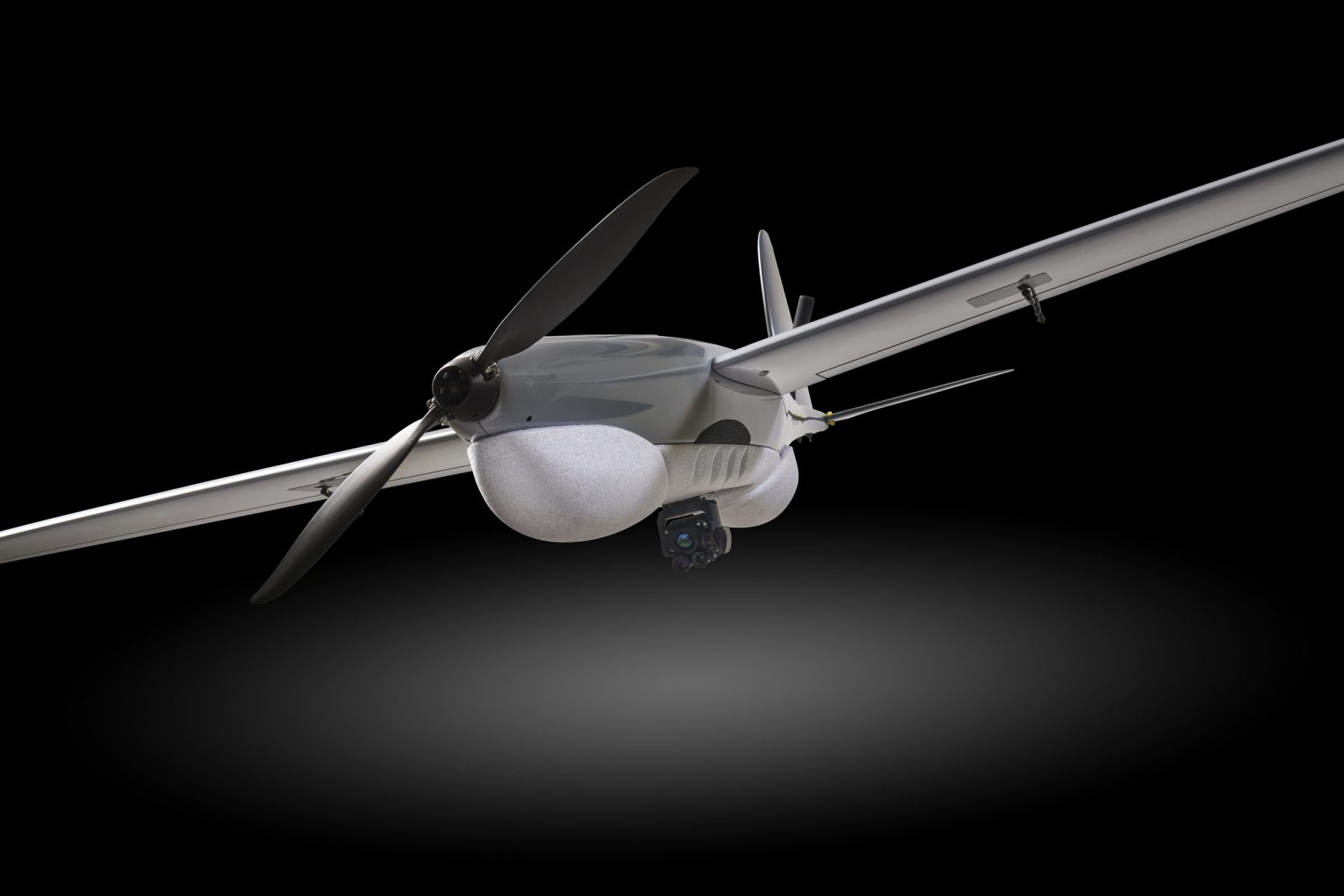
The Sky-Watch RQ-35 Heidrun delivers persistent ISR capabilities in extreme cold, maintaining full operational performance at temperatures down to −30 °C (−22 °F).
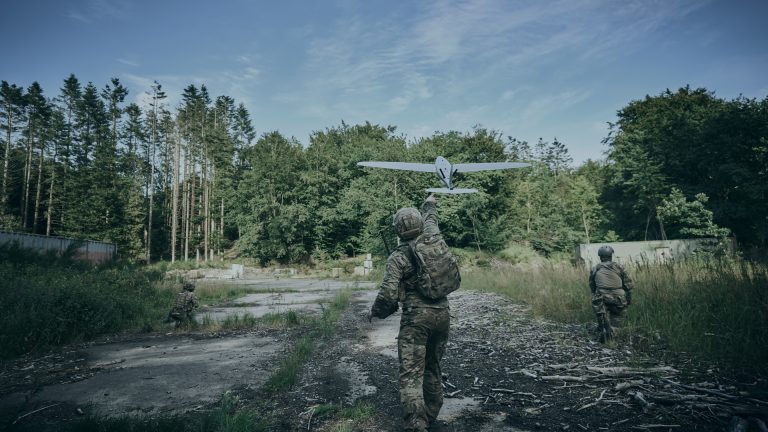
Validated through rigorous environmental testing and field deployments in Greenland and Finland, the system demonstrates rapid deployment, stable sensor performance, and sustained endurance under real-world Arctic conditions.
This document outlines the proven performance of the RQ-35 Heidrun and confirms its readiness for mission-critical operations in high-latitude environments.
Environmental qualification
To ensure mission readiness in arctic regions, the system underwent a dual-phase qualification program consisting of controlled laboratory environmental testing and field validation.
- Laboratory testing (MIL-STD-810H): The system was tested in accordance with MIL-STD-810H, Method 502.7, Procedure II. These tests involved continuous exposure to a constant cold environment of −21 °C (−5.8 °F) for a minimum duration of one hour while fully operational.
- Field validation: Field trials were conducted in Greenland and Finland, at ambient temperatures reaching −23.4 °C (−10.12 °F) in Greenland and −30 °C (−22 °F) in Finland with natural wind patterns to verify real-world performance beyond chamber limitations.
- Realistic operational simulation: Controlled tests included a headwind simulator providing air speeds of 15–16 m/s to account for convective cooling (wind chill).
- Thermal stabilization: Protocols required the RQ-35 Heidrun to reach target temperatures and settle for a minimum of 2 hours before power-on to simulate a “cold-soaked” deployment.
Power system performance
Operational performance at down to −30 °C (−22 °F) requires specialized battery management and drivetrain conditioning to overcome increased air density and chemical resistance in power cells.
- Battery warming and pre-conditioning: The RQ-35 Heidrun utilizes a specific pre-flight procedure to raise battery temperatures from a cold-soaked state (−22 °C / −7.6 °F) to a mission-ready state of −14 °C (−6.8 °F) via drivetrain warming.
- Power stability: Post-mission data showed the battery level remained at 13.8 V after a 122-minute flight, confirming voltage stability even at the end of a long-endurance cycle.
- Climb performance: The system achieved an average rate of climb of 4.2 m/s during the “fast climb” phase in Arctic conditions, with no loss of height recorded after launch.
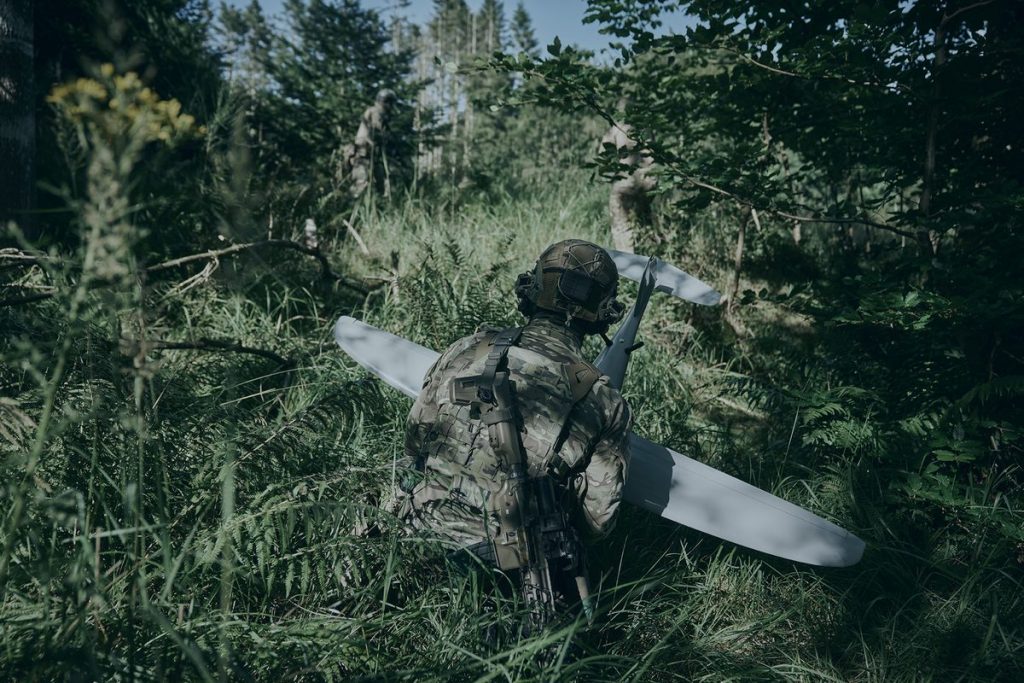
- Launch capability: In Arctic conditions, the system demonstrated standard assembly and system preparation in 5 minutes. Boot-up and pre-warming of tablets can be handled simultaneously and requires 5 minutes. Once the operator has assembled the UAV, the process of warming the drivetrain and batteries to ensure sufficient power delivery during launch takes 7 minutes and can be initiated while remaining system preparation activities are carried out.
Avionics and sensor payload reliability
Reliable C2 and sensor payload performance are critical when operating at high latitudes where equipment is prone to signal degradation.
- Ground Control Station (GCS) resilience: The system utilizes ruggedized tablets to ensure the GCS remains functional in sub-zero environments.
- Data link integrity: Video was streamed to the Sky-Watch Drone Manager (SDM) throughout extreme cold exposure with no recorded shutdowns, alarms, or functional losses.
- EO/IR payload and tracking: During thermal tests at −30 °C (−22 °F), the target tracking system successfully locked onto and followed moving targets without interruption.
- Flight control stability: The system demonstrated consistent stability across all mission segments, including loitering at 100 m altitude and deep-stall landings.
Airframe and mechanical integrity
The RQ-35 Heidrun is engineered to maintain structural integrity and mechanical flexibility despite the increased brittleness and contraction associated with Arctic temperatures.
- Structural durability: Post-flight inspections following landings in Greenland confirmed no damage to the airframe, verifying the resilience of the materials against impact and thermal stress.
- Mechanical actuation: The drivetrain and control surfaces remained fully operational after thermal stabilization at −23.4 °C (−10.12 °F), with no reported mechanical failure.
Operational outcomes in Arctic environments
The RQ-35 Heidrun provides significant advantages for defense application in arctic environments.
- Extended endurance: The RQ-35 Heidrun maintains a 2-hour+ flight duration at −23.4 °C (−10.12 °F).
- Rapid deployment: The system can launch within 17 minutes of power-on even in Arctic climates.
- Mission success: The ability to perform target tracking and maintain high-quality video links in sustained −30 °C (−22 °F) conditions ensures that ISR missions are not compromised by weather.
Through rigorous MIL-STD testing and validated field performance, the RQ-35 Heidrun is established as a premier solution for mission-critical operations in Arctic environments.
High-intensity operational validation: Griffin Tech Days 2026
The operational maturity of the Sky-Watch RQ-35 Heidrun was substantiated during the Griffin Tech Days 2026, a high-intensity demonstration event held at the Rovajärvi Shooting Range in Finland. As Europe’s largest shooting range, Rovajärvi provided an expansive environment for evaluating UAS reliability under sustained Arctic stress.
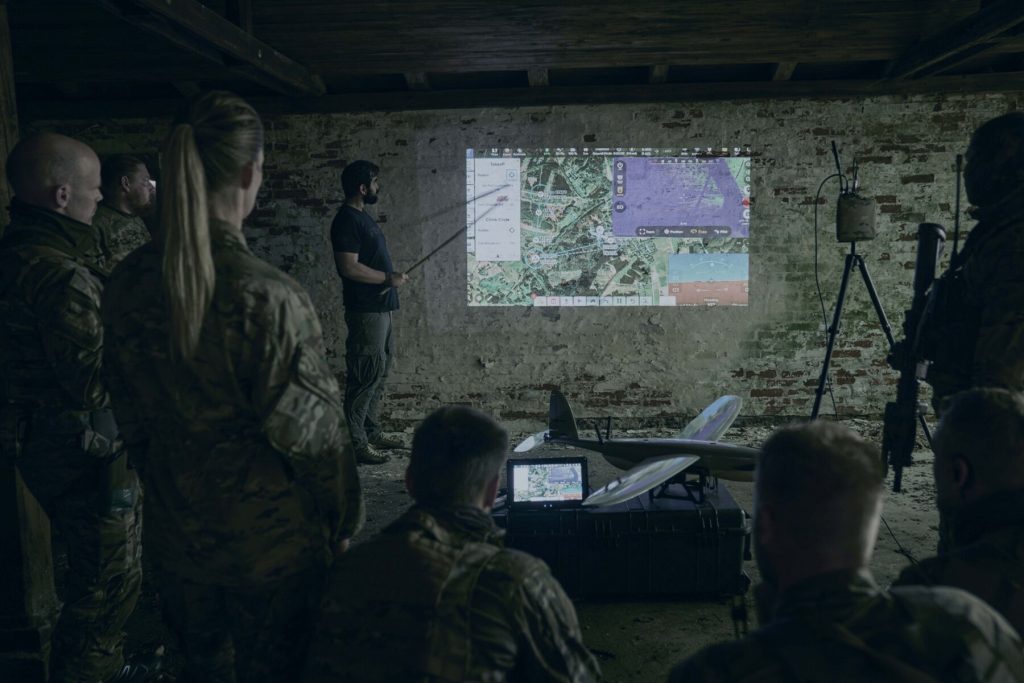
The event served as a critical evaluation platform for observers from various Finnish governmental agencies and International Special Operations Forces (SOF) representing a significant number of NATO allied countries. The focus was on identifying systems capable of maintaining persistent ISR capabilities in arctic climate theaters.
Throughout the three-day event, the RQ-35 Heidrun was subjected to the arctic climate with ambient temperatures ranging consistently down to −30 °C (−22 °F). Despite these extreme conditions, the system demonstrated unique operational availability and reliability.
The RQ-35 Heidrun successfully executed 6 high-intensity demonstrations within a 72-hour window with a 100% mission success rate. This success rate under sustained sub-zero exposure confirms the system’s ability to cycle through missions without thermal degradation or mechanical fatigue.
Conclusion of Finland field results
The successful execution of all six demos at Griffin Tech Days 2026 validates the RQ-35 Heidrun as a mission-ready platform for NATO, SOF and governmental agencies. The system’s ability to operate at temperatures down to −30 °C (−22 °F), while providing stable video streaming and target tracking, establishes a new benchmark for UAS reliability in Arctic defense and security applications.